
JEE Mini Mock Test 2026: Daily Practice That Actually Works
Blog
Leave your details and our counselors will reach out to you shortly.
🎧 Listen to this article
JEE Mini Mock Test 2026: Daily Practice That Actually Works
Quick Summary
- What: A JEE mini mock test is a short, timed practice paper (10–20 questions, 15–30 minutes) that simulates JEE Main and Advanced exam conditions — without eating up your entire day.
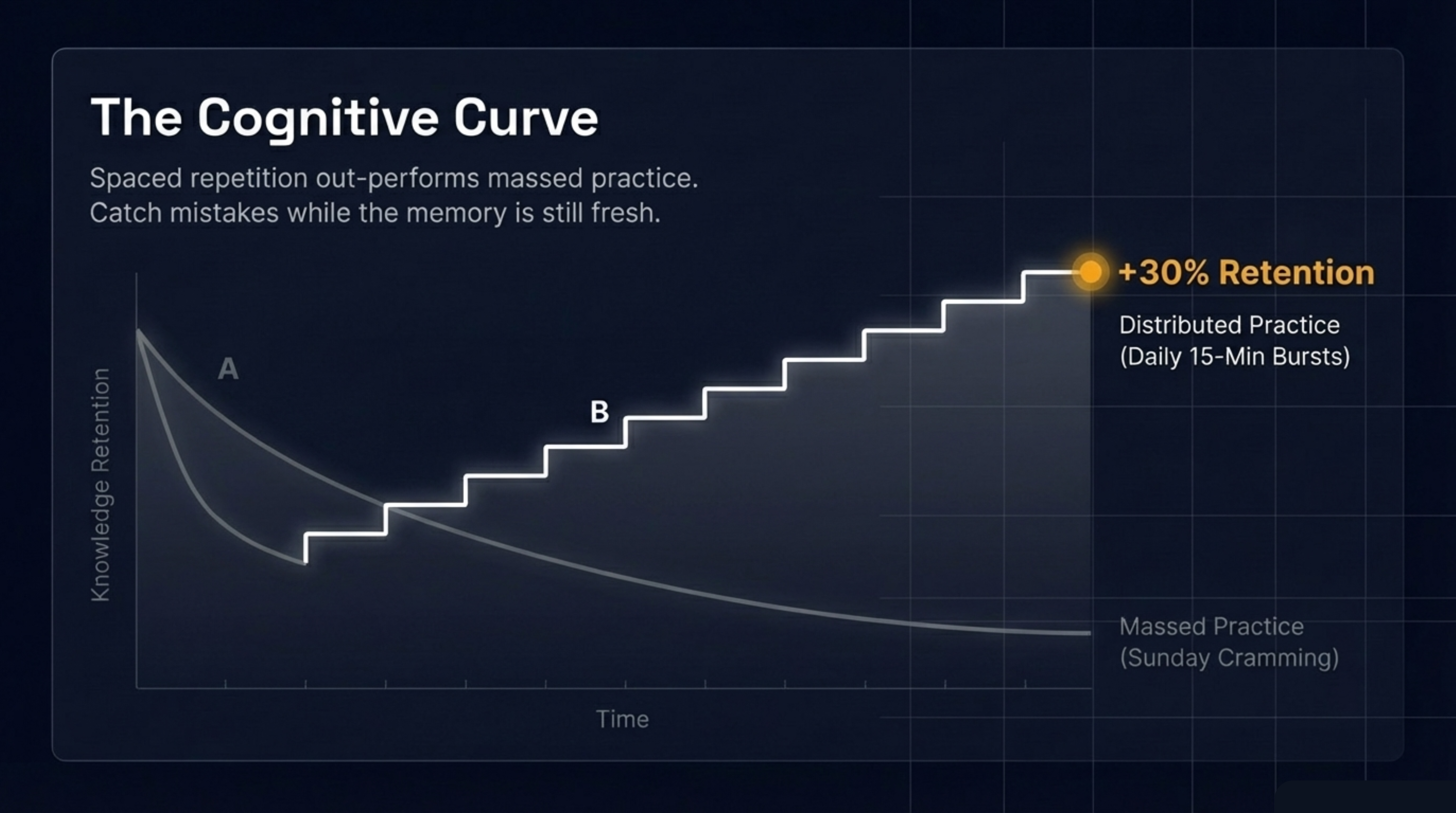
- Why it works: Research shows spaced, short-burst practice improves retention by up to 30% compared to marathon test sessions.
- Where to try: EduNext's JEE Tribe DSB Challenge offers free daily mini mock tests with real-time analytics, leaderboards, and a community of 10,000+ aspirants.

- Best for: Class 11, 12, and dropper students preparing for JEE Main 2026 Session 2 (April 2–9) and JEE Advanced 2026.
- Cost: Free. No forms, no spam calls. Just sign up and start solving.
Table of Contents
- Introduction: Why Are Full-Length Mocks Not Enough?
- What Is a JEE Mini Mock Test?
- Why JEE Mini Mock Tests Matter in 2026
- EduNext's JEE Tribe DSB Challenge: How It Works
- How to Use JEE Mini Mock Tests Effectively: A Daily Strategy
- Subject-Wise Mini Mock Strategy for JEE 2026
- JEE Main 2026: What You Should Know Right Now
- Who Should Take JEE Mini Mock Tests?
- 5 Mistakes Students Make with JEE Mock Tests
- Frequently Asked Questions
- Final Verdict
Introduction: Why Are Full-Length Mocks Not Enough?
Here's a reality most JEE coaching centres won't tell you: taking one full-length mock test every Sunday is not enough. Not even close.
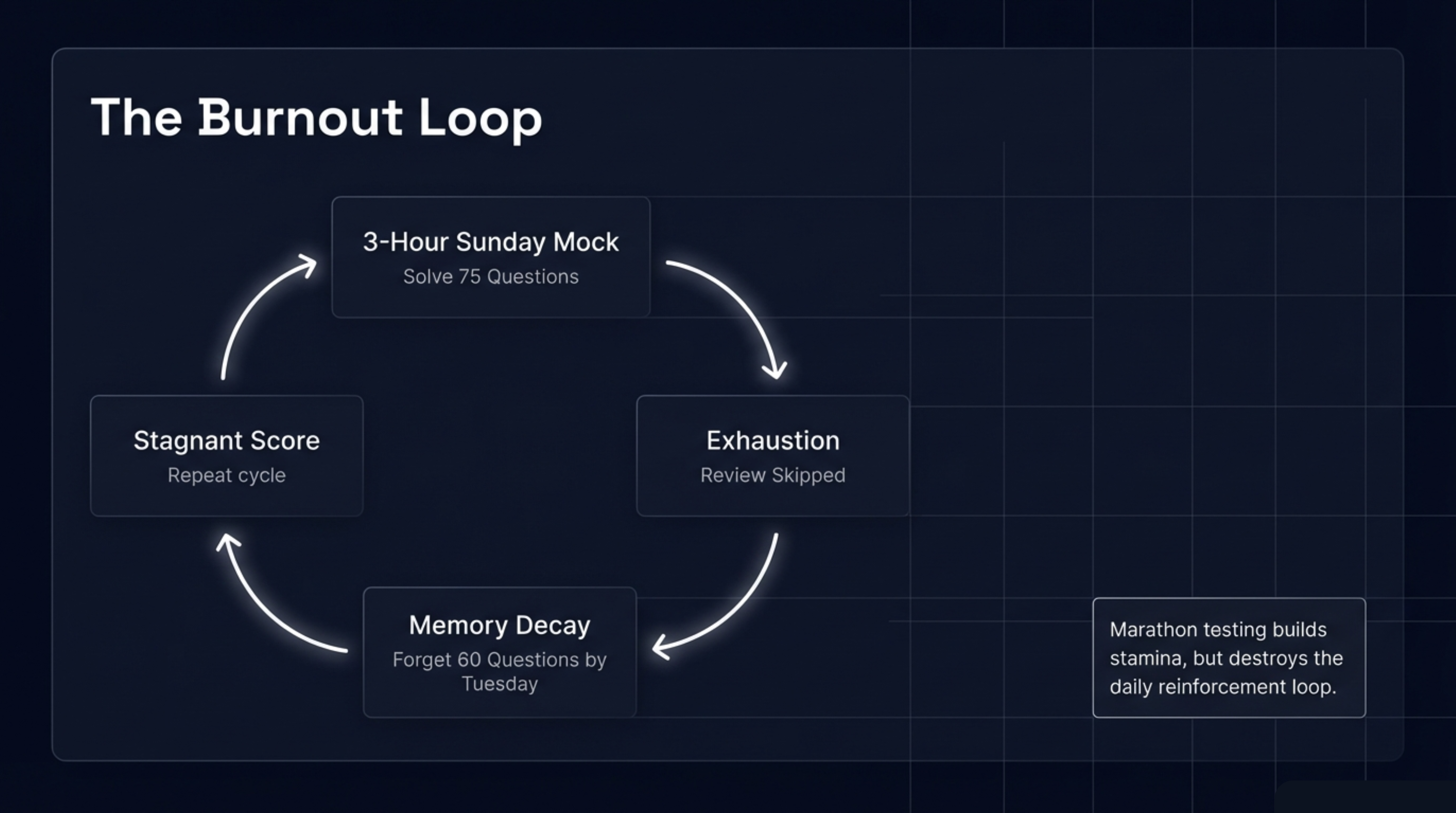
Full-length tests are important, sure. But they're exhausting, hard to review properly, and most students end up making the same mistakes week after week because there's no daily reinforcement loop. You solve 75 questions on Sunday, forget 60 of them by Tuesday, and wonder why your score isn't improving.
That's where JEE mini mock tests come in — short, focused, daily practice sets designed to build speed, accuracy, and concept retention in 15–30 minutes. Think of them as the gym reps between your monthly fitness test.
EduNext's JEE Tribe DSB (Daily Score Booster) Challenge is built around this exact idea. Let's break down everything you need to know.
What Is a JEE Mini Mock Test?
A JEE mini mock test is a condensed version of the full JEE Main or Advanced paper. Instead of 75–90 questions over 3 hours, you get 10–20 carefully curated questions in 15–30 minutes.
The questions are not random. They follow the exact pattern, difficulty level, and marking scheme of the actual exam. The only difference? You can fit one into your lunch break.
Mini Mock Test vs Full-Length Mock Test
| Feature | Mini Mock Test | Full-Length Mock |
|---|---|---|
| Duration | 15–30 minutes | 3 hours |
| Questions | 10–20 | 75–90 |
| Frequency | Daily | Weekly / Bi-weekly |
| Best for | Speed, accuracy, daily habits | Stamina, time management |
| Review time | 10–15 minutes | 1–2 hours |
| Burnout risk | Low | High (if overdone) |
The takeaway? You need both. Full-length mocks for stamina. Mini mocks for sharpness. But most students skip the daily practice entirely, and that's where the gap shows up on exam day.
Why JEE Mini Mock Tests Matter in 2026
1. The JEE Main 2026 Pattern Demands Speed
JEE Main 2026 follows the NTA's established pattern: 75 questions across Physics, Chemistry, and Mathematics in 3 hours. That's roughly 2.4 minutes per question. For JEE Advanced, some questions give you barely 3 minutes with multi-step calculations.
Mini mock tests train you to think fast, eliminate wrong options quickly, and manage your per-question time — something a weekly full-length test alone can't build consistently.
2. Spaced Repetition Beats Cramming
Cognitive science has repeatedly shown that distributed practice (studying a little every day) beats massed practice (marathon study sessions) for long-term retention. A daily 15-minute mini mock acts as a built-in spaced repetition system for your JEE concepts.
3. Instant Feedback Fixes Mistakes Faster
When you take a mini mock and review it immediately, you catch mistakes while the question is still fresh in your memory. Compare this to reviewing a 3-hour test 2 days later — by then, you've already forgotten why you picked option B.
4. It Builds Exam Temperament Without the Pressure
A lot of students freeze during the actual JEE because they aren't used to solving questions under a timer. Mini mocks remove the intimidation factor. You solve 10–15 questions daily under timed conditions, and gradually, exam-like pressure becomes your normal.
EduNext's JEE Tribe DSB Challenge: How It Works
The JEE Tribe DSB (Daily Score Booster) Challenge is EduNext's free daily mini mock test platform for JEE aspirants. Here's what makes it different from random question-of-the-day apps:
Key Features
- Daily Challenges: A fresh set of curated JEE-level questions drops every day. Physics, Chemistry, Maths — all covered in rotation.
- Real-Time Analytics: See your accuracy, speed, and topic-wise performance instantly. No waiting for "results next week."
- Live Leaderboard: Compete with 10,000+ JEE aspirants across India. See where you rank daily — nothing motivates like a little healthy competition.
- Secure & Fair: Anti-cheat mechanisms ensure a level playing field. Your rank is earned, not gamed.
- Community of Aspirants: Join a tribe of serious JEE students. Discuss doubts, share strategies, and push each other forward.
- Zero Spam, Zero Forms: This is EduNext. Sign up with Google or email. That's it. No phone number harvesting, no 200+ spam calls.
JEE Tribe DSB Challenge — At a Glance
| Detail | Info |
|---|---|
| Platform | preptribe.getedunext.com |
| Cost | Free |
| Exam focus | JEE Main & JEE Advanced 2026 |
| Frequency | Daily |
| Subjects | Physics, Chemistry, Mathematics |
| Analytics | Real-time accuracy, speed, topic-wise breakdown |
| Leaderboard | Live, all-India ranking |
| Community | 10,000+ JEE aspirants |
| Sign-up | Google or Email — no phone number required |

How to Use JEE Mini Mock Tests Effectively: A Daily Strategy
Taking a mini mock is the easy part. Using it to actually improve? That needs a system. Here's a strategy that works:
Step 1: Schedule It Like an Appointment
Pick a fixed time every day — ideally late morning or early evening when your brain is sharp. Treat it like an appointment, not an afterthought. The consistency matters more than the time slot.
Step 2: Simulate Real Exam Conditions
When you start the mini mock, close all tabs, put your phone away, and set a timer. The whole point is to train your brain to perform under pressure. If you're solving with Netflix in the background, you're wasting the exercise.
Step 3: Review Immediately (Not Tomorrow, Not Later)
The moment you finish, go through every question — including the ones you got right. Ask yourself: did I solve this the fastest way? Could I have eliminated options quicker? For wrong answers, identify the exact concept gap and note it down.
Step 4: Track Your Weak Areas
EduNext's real-time analytics automatically tag your weak topics. If you're consistently dropping marks in Electrochemistry or Coordinate Geometry, you'll see it in the data. Dedicate 30 minutes that evening to revising just that topic.
Step 5: Check the Leaderboard, But Don't Obsess
The leaderboard is there to motivate you, not stress you out. Use it to benchmark your progress over weeks, not to compare yourself daily. If you're improving your own score week over week, you're on track.

Subject-Wise Mini Mock Strategy for JEE 2026
Physics
Focus your mini mocks on Mechanics, Electromagnetism, and Optics — these three topics alone account for roughly 60% of JEE Physics. Prioritise numerical-type questions, as JEE Main 2026 has 5 numerical questions per section.
Chemistry
Chemistry is the highest-scoring subject for most JEE toppers. Use mini mocks to drill Organic reaction mechanisms, Periodic Table trends, and Chemical Bonding. For Physical Chemistry, focus on accuracy in calculations — one decimal error can cost you 4 marks with negative marking.
Mathematics
Maths is where time management matters most. Use mini mocks to practice Calculus (Integration and Differentiation), Coordinate Geometry, and Probability. If a question is taking more than 3 minutes, mark it and move on — the mini mock trains exactly this decision-making skill.
JEE Main 2026: What You Should Know Right Now
Here's the current timeline for JEE 2026, so you can plan your mini mock routine accordingly:
| Event | Date (2026) |
|---|---|
| JEE Main Session 1 | January 21–29, 2026 |
| JEE Main Session 2 | April 2–9, 2026 |
| JEE Advanced 2026 | Expected May/June 2026 (date TBA) |
| JoSAA Counselling | Expected June–July 2026 |
Source: NTA (jeemain.nta.nic.in). JEE Advanced date to be confirmed by the conducting IIT.
If you're preparing for Session 2 or JEE Advanced, you still have time to build a daily mini mock habit. Even 30 days of consistent daily practice can move your percentile by several points.
JEE Main Qualifying Cutoffs: Recent Trends
| Category | 2023 | 2024 | 2025 |
|---|---|---|---|
| General (CRL) | 90.77 %ile | 93.24 %ile | 93.10 %ile |
| OBC-NCL | 78.52 %ile | 79.93 %ile | Refer NTA |
| SC | 54.01 %ile | 56.43 %ile | Refer NTA |
| ST | 44.25 %ile | 46.82 %ile | Refer NTA |
Source: NTA JEE Main cutoff notifications (2023, 2024, 2025). 2025 General cutoff released April 18, 2025.
The cutoff has been trending upward for General category. Daily mini mock practice is one of the most effective ways to push yourself above the qualifying threshold — especially for borderline students.
Seats Available Through JoSAA 2025
For context, here's what you're competing for:
- 23 IITs: 18,160 seats
- 32 NITs: 24,525 seats
- 26 IIITs: 9,940 seats
- Total (JoSAA 2025): 62,853 seats across IITs, NITs, IIITs, and GFTIs.
Source: JoSAA 2025 (josaa.nic.in). Note: IISc is joining JoSAA for B.Tech from 2026.
Every single percentile point matters when lakhs of students are competing for these seats. A daily mini mock habit is your edge.
Related Blog:JEE Main 2026 Session 2
Who Should Take JEE Mini Mock Tests?
- Class 11 students: Start early. Build the habit now so that by Class 12, timed practice feels natural.
- Class 12 students: You're in the final stretch. Daily mini mocks keep your concepts sharp alongside board prep.
- Droppers: You've already covered the syllabus. Mini mocks are your primary weapon now — use them to refine speed and accuracy.
- Students in coaching: Your coaching gives you full-length tests. Add daily mini mocks from EduNext as a supplement. The combination is powerful.
5 Mistakes Students Make with JEE Mock Tests (and How Mini Mocks Fix Them)
- Only taking full-length mocks: You're training stamina but not sharpness. Add daily mini mocks for speed and accuracy.
- Not reviewing after the test: A 15-minute mini mock with 10 minutes of review beats a 3-hour test with no review.
- Ignoring weak topics: EduNext's analytics show your weak areas in data. You can't ignore what's staring at you on a dashboard.
- Solving without a timer: If you're not timed, you're not practising. Mini mocks enforce time limits by design.
- Studying in isolation: No peer benchmarking = no reality check. The JEE Tribe leaderboard shows you exactly where you stand among 10,000+ students.

Frequently Asked Questions
Is the JEE Tribe DSB Challenge free?
Yes, completely free. You sign up with Google or email on preptribe.getedunext.com. No payment, no hidden charges, no phone number collection, no spam calls.
How many questions are in each daily mini mock test?
Each daily challenge contains a curated set of JEE-level questions across Physics, Chemistry, and Mathematics. The exact count varies by day to keep the format dynamic, but expect 10–20 questions that can be completed in 15–30 minutes.
Can I take the JEE mini mock test on my phone?
Yes. The JEE Tribe platform is mobile-friendly, so you can take your daily challenge from any device with a browser.
Is this useful for JEE Advanced or only JEE Main?
The JEE Tribe DSB Challenge covers both JEE Main and JEE Advanced level questions. The daily challenges are designed to build the kind of speed, accuracy, and problem-solving skills needed for both exams.
How is this different from random question-of-the-day apps?
Three key differences: (1) real-time performance analytics that track your progress over time, (2) a live leaderboard so you can benchmark against real students, and (3) anti-cheat measures that ensure fair rankings. It's a structured daily practice system, not a trivia app.
Final Verdict: Should You Add JEE Mini Mocks to Your Prep?
Absolutely. If you're serious about JEE 2026, a daily mini mock test is the single highest-ROI addition you can make to your study routine. It takes 15–30 minutes, builds speed and accuracy over time, gives you instant feedback, and keeps you connected to a community of motivated aspirants.
EduNext's JEE Tribe DSB Challenge makes this easy: free, no spam, real analytics, and a leaderboard that keeps you honest. Whether you're preparing for JEE Main Session 2 (April 2–9, 2026) or JEE Advanced, start your daily mini mock habit today.
Ready to boost your JEE score daily?
Join 10,000+ aspirants on EduNext's JEE Tribe DSB Challenge. Free. No spam calls. Just daily practice that works.
Also check on EduNext:
- JEE Main Score Calculator 2026 — Paste your Digialm response and get instant percentile predictions.
- Explore 10,000+ colleges on EduNext — No forms, no spam. Just data.